
Your building lost power to half the second floor at 4pm on a Tuesday. Your landscaper knows a guy. He rewired his own kitchen and does side work. Before you call him, check what the job actually involves.
The line between residential and commercial electrical work is not about building size. It is about four things: the voltage and phase of the incoming service, the permit and inspection load the job triggers, how much revenue you lose while the power is off, and who carries the liability when something arcs. Cross into commercial scope and all four change at once.
Here is what shifts, and how to tell which side of the line your job sits on.
Residential vs Commercial at a Glance
Residential
- Service: single-phase, 120/240V
- Size: 100A to 400A
- Gear: load center and breakers
- Wiring: Romex in wood framing
- Energy code: Title 24 residential provisions
- Permit: over the counter, one inspection
- Safety: NEC basics
- Schedule: business hours
- Insurance: rarely checked
- Downtime cost: inconvenience
Commercial
- Service: three-phase, 120/208V or 277/480V
- Size: 400A to 4000A and up
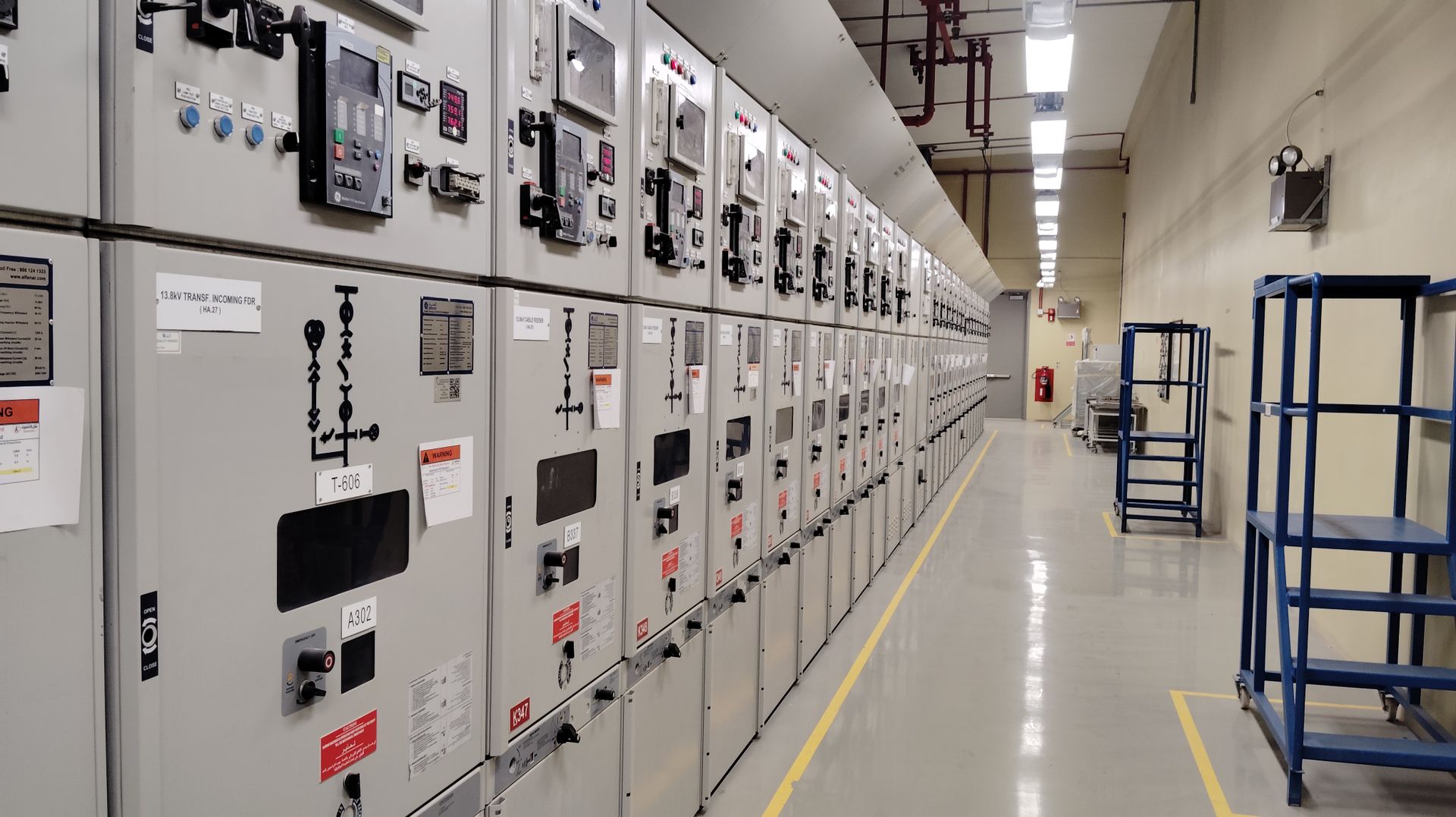
- Gear: switchgear, switchboards, transformers, feeders
- Wiring: EMT, rigid conduit, MC cable, cable tray
- Energy code: Title 24 Part 6 nonresidential plus acceptance testing
- Permit: plan check, stamped drawings, multiple inspections, fire and utility sign-off
- Safety: NFPA 70E arc flash program, labeled gear, energized work permits
- Schedule: nights, weekends, phased shutdowns around tenants
- Insurance: $1M to $2M general liability, workers comp, additional insured
- Downtime cost: lost revenue, spoiled inventory, tenant claims
What Commercial Scope Looks Like in Practice
Abstract comparisons are easy to argue with. Real jobs are not. A look through the Pelican Coast Electric project library shows the work a residential electrician has no path into.
- Switchgear installation, custom configured and integrated into a live distribution network without shutting the building down
- Transformer installation, sized to the facility load and set with utility coordination
- Underground feeders and an electrical vault, both requiring trenching, utility coordination and inspection before backfill
- Commercial panel installation and transfer switch installation for backup power
- Tenant improvement buildouts and lighting control systems tied to Title 24 compliance
None of those jobs start with a wire. They start with a load calculation, a set of drawings, and a call to the utility.
Three-Phase Power and 480V Distribution
A house runs single-phase 120/240V. An office building, warehouse or medical suite runs three-phase, usually 120/208V for smaller buildings and 277/480V for larger ones. Rooftop HVAC, elevators, air compressors, commercial refrigeration and EV charging banks are all designed around three-phase.
Three-phase changes the math and the risk.
- Phase balancing. Loads have to be distributed across all three legs. An unbalanced system runs hot, wastes energy and shortens equipment life.
- Available fault current. A 2000A service delivers far more energy into a fault than a 200A house panel. Equipment has to be rated for the fault current at each point in the system.
- 277V lighting. Commercial lighting typically runs at 277V off the 480V system. Wiring a 277V fixture like a 120V fixture is a fire.
- Step-down transformers. Getting 120V receptacle power out of a 480V building requires transformers, secondary overcurrent protection and grounding electrode conductors sized to the transformer, not to the panel.
See switchgear installation and upgrades for how the distribution side of these systems gets built and replaced.
Permits, Plan Check, and Title 24
A residential panel swap in Orange County is usually a same-day permit and one inspection. A commercial project is a different process.
Most commercial electrical work requires stamped drawings, plan check review and a sequence of inspections: underground before backfill, rough-in before drywall, then final. Fire department review comes into play for alarm circuits, emergency lighting and egress. The utility has its own approval track for anything touching the service.
Title 24 is where projects stall. The 2025 California Energy Code applies to any permit application filed on or after January 1, 2026. For nonresidential work, compliance is not a checkbox at the end. Lighting power density limits, occupancy sensors, daylighting controls, demand response capability and multi-level dimming all have to be designed in. Then the installed controls have to pass acceptance testing performed by a technician certified through the state ATTCP program. No passing acceptance test, no final sign-off, no certificate of occupancy.
A residential electrician has no ATTCP-certified technician on staff and no relationship with a plan checker. The permit gets pulled, the work gets done, and the project fails inspection three weeks before your tenant moves in. More detail: Title 24 compliance for OC commercial property owners.
Tenant Improvement Work Is a Coordination Job
A tenant improvement buildout is rarely an electrical problem. Electrical is one trade inside a sequence controlled by a general contractor and a construction schedule with real money attached to each date.
Your electrician has to hold a slot in that sequence. Rough-in lands after framing and before drywall. Device locations reconcile against the mechanical and plumbing drawings before anyone cuts a hole. Low-voltage pathways get coordinated with the tenant IT vendor. Panel schedules get updated and posted, because the next buildout works off them.
Miss a rough-in window and the GC either holds the whole job or moves forward and bills you for the demo. See tenant improvement electrical services for how the buildout side runs.
After-Hours Work and Keeping the Building Live
A homeowner tolerates power off for six hours. A restaurant loses a dinner service. A dental office cancels a day of appointments. A distribution center stops shipping.
Commercial electricians plan around that. A panel or switchgear replacement gets sequenced across nights and weekends, with temporary feeds and load transfers so critical circuits stay energized. Shutdown windows get written, communicated to tenants in advance, and held to the minute.
Ask any electrician bidding your job one question: what is the shutdown plan and how long is the window. A vague answer means they have not done this before. For unplanned outages, emergency commercial electrical repair in Orange County runs 24/7.
Arc Flash, NFPA 70E, and Where Your Liability Sits
This section is about you, not the electrician.
If you own or manage a commercial building, OSHA holds you responsible for the safety of anyone working on your electrical equipment. NFPA 70E is the standard OSHA measures against. Practically, an owner or facilities lead is expected to have an arc flash risk assessment on file, hazard labels on switchgear and panels, documented shutdown and lockout procedures, and proof that whoever touches the gear is trained and wearing correct arc-rated PPE.
The 2025 California Electrical Code, based on the 2023 NEC, requires arc flash hazard labels on service equipment and feeder-supplied equipment rated 1,000 amps or more in nonresidential buildings. The label has to show the arc flash boundary, the incident energy or PPE category, and the date applied.
When an uninsured handyman opens your 1200A switchgear and gets hurt, the exposure lands on the building. A commercial contractor arrives with a written safety program, arc-rated PPE and an insurance policy sized to the risk. Related: commercial electrical code violation checklist for Orange County properties.
Licensing and Insurance a Commercial GC Will Ask For
In California, both residential and commercial electrical contractors hold a C-10 license and a $25,000 CSLB license bond. The license alone tells you very little. What separates the two tiers shows up in the paperwork behind the license.
- Field certification. California requires state electrician certification for anyone making connections over 100 volt-amperes for a C-10 contractor. The categories are separate. A Residential Electrician certification is not a General Electrician certification.
- General liability limits. Commercial GCs and property managers routinely require $1M per occurrence and $2M aggregate, with the owner and GC named as additional insured. Small residential shops often carry far less.
- Workers compensation. Required for any contractor with employees. Ask for the certificate, not a verbal answer.
- Bonding capacity. Larger projects require performance and payment bonds. A one-truck operation has no surety relationship to draw on.
- Prevailing wage and DIR registration. Required for public works. A residential contractor is generally not registered.
Verify the license at the CSLB website before you sign anything. License numbers are public. Pelican Coast Electric operates under CA License #1133193.
When Not to Use a Handyman or House Electrician
Call a commercial contractor when any of the following apply.
- Your building runs three-phase power, 208V or 480V.
- The work touches switchgear, a switchboard, a transformer, a main distribution panel or a service feeder.
- The job requires a permit with plan check, stamped drawings or Title 24 acceptance testing.
- A general contractor is running the schedule and requires certificates of insurance.
- Tenants occupy the building and the work requires a planned shutdown.
- Equipment involved is rated 1,000 amps or more.
- The work supports life safety systems, emergency lighting, fire alarm circuits or egress.
- Your insurance carrier or lease requires documented, permitted, code-compliant work.
One more test. Ask for photos of the last three commercial jobs and the name of the plan checker they worked with. A commercial electrician answers in seconds.
Where to Start Based on Your Job
- Power is out or a breaker keeps tripping right now: emergency commercial electrical repair
- New tenant, new buildout or a space being reconfigured: tenant improvement electrical
- Out of capacity, adding EV charging or new HVAC: commercial electrical panel upgrades
- Aging or failing distribution equipment: switchgear installation and upgrades
- Not sure yet: start at commercial electrician services for Orange County businesses
Frequently Asked Questions
Is a commercial electrician more expensive than a residential electrician?
Hourly rates are higher and the total scope is larger, because permits, plan check, engineering, acceptance testing and after-hours labor are part of the job. Compare the bid against the cost of a failed inspection or a day of lost revenue, not against a residential hourly rate.
Is a residential electrician allowed to work on a commercial building in California?
A C-10 license does not restrict by building type. State electrician certification categories do differ, and a Residential Electrician certification is a different credential from a General Electrician certification. The bigger constraints are practical: three-phase experience, plan check familiarity, insurance limits, and whether the general contractor will allow them on site.
How do I tell if my building is three-phase?
Look at the main panel. Three-phase panels have three hot bus bars and breakers in sets of three. The service label lists a voltage like 120/208V or 277/480V. Single-phase reads 120/240V. Photograph the panel label and send it over if you want a read on it.
Do tenant improvements always require a permit in Orange County?
Nearly always for anything involving new circuits, panel changes, lighting layout changes or relocated devices. Orange County cities enforce plan check on commercial tenant improvement work, and unpermitted work surfaces at lease renewal, sale or insurance inspection.
Talk to a Commercial Electrician in Orange County
Pelican Coast Electric handles switchgear, transformers, panel upgrades, tenant improvements, underground distribution and emergency repair for commercial properties across Orange County and San Bernardino County. Licensed C-10 contractor, CA License #1133193, 24/7 emergency response.
Call (949) 989-4404 or request a commercial quote below.