
Knob and tube wiring was the standard residential electrical system from the 1880s into the 1940s, and a surprising amount of it is still energized in Orange County today. It was phased out for good reason. It has no ground, its insulation degrades with age, and it was never sized for the load a modern household puts on it.
Almost nobody goes looking for it. Homeowners usually find out during escrow, or when an insurance carrier flags the policy at renewal. This guide covers what you can identify yourself, which OC neighborhoods still have it, how carriers tend to treat it, and the mistakes that turn a manageable project into an expensive one.
What Knob and Tube Wiring Is
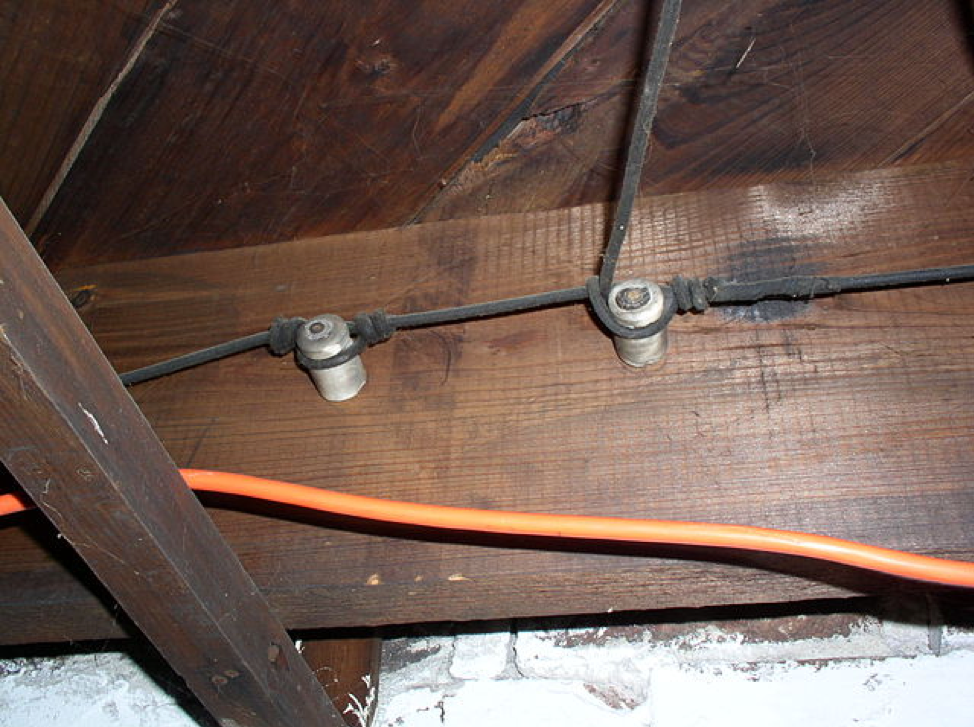
Knob and tube is a two-wire system. The hot conductor and the neutral conductor run separately through the framing instead of being bundled together in a single cable. Ceramic knobs hold the wires away from joists and studs, and ceramic tubes line the holes where wire passes through framing members. The conductors are insulated with rubber wrapped in woven cloth rather than the plastic sheathing used today.
Two things make that a problem now. There is no equipment grounding conductor, so the system does not provide an equipment-grounding path for fault current. And the rubber insulation hardens, cracks, and separates from the copper after eight or nine decades, especially near heat sources or anywhere later work disturbed it.
Five Signs Your Home Still Has Knob and Tube Wiring
Most of these you can spot yourself. Look, but do not open anything up. Pulling covers off outlets, panels, or fixture canopies on a system this old is how people get hurt.
1. Ceramic Knobs and Tubes in the Attic or Crawlspace
This is the definitive sign. Look for white or off-white porcelain cylinders about the size of a thread spool, nailed to the tops of joists or the sides of studs, with a wire seated in the groove. Where a run crosses framing, a porcelain tube is pushed through the drilled hole and the wire passes through it. The give-away is two individual wires running several inches apart from each other rather than one flat cable.
2. Cloth-Sheathed Conductors
Modern branch circuit cable has a flat plastic jacket, usually white, yellow, or orange. Knob and tube conductors are round, run individually, and wrapped in a woven fabric that has gone brittle and grey-brown with age.
One caveat. Cloth sheathing by itself does not prove knob and tube, because early cable from the 1950s and 1960s also used a cloth outer jacket over a bundled assembly. The ceramic knobs are what separate the two.
3. No Ground Anywhere in the System
Knob and tube has no ground wire. If a plug-in receptacle tester reports an open ground on circuit after circuit, or the only conductors visible at a ceiling fixture are one black and one white with nothing bare or green, the system was never grounded to begin with.
4. Two-Prong Outlets Throughout the House
A couple of two-prong receptacles in one back bedroom usually means a single circuit was skipped during a past update. Two-prong outlets in every room is a much stronger signal that the original wiring is still doing most of the work.
Watch for the reverse as well. Three-prong receptacles installed on ungrounded knob and tube circuits are common in homes that have changed hands a few times. The outlet looks current, accepts a grounded plug, and grounds nothing. A tester catches it in seconds.
5. A Fuse Box Instead of a Breaker Panel
Screw-in fuses and pull-out fuse blocks instead of a row of toggle breakers put the service equipment in the same era as the wiring behind it. Sixty-amp service, or a panel with only four to eight circuits serving the whole house, points the same direction.
Which Orange County Neighborhoods Still Have It
Knob and tube tracks with pre-1950 housing stock, and in Orange County that is concentrated in a handful of areas.
- Balboa Peninsula — beach cottages and duplexes from the 1920s and 1930s, often with decades of additions layered over the original service.
- Corona del Mar — the older blocks inland of Ocean Boulevard still hold pre-war homes that were never fully rewired.
- Older Newport Beach — Balboa Island, Lido, and the Newport Heights bluffs.
- Santa Ana — Floral Park, Washington Square, and French Park contain some of the oldest intact housing in the county.
- Orange — the Old Towne historic district, where remodels are constrained and original systems frequently survive.
- Garden Grove — the pre-war pockets around the historic Main Street area, mixed in among post-war tract housing. We cover it as part of our wider Orange County service area.
Post-1950 tracts are generally clear. If your home was built before about 1945 and has not been through a documented rewire, the safe assumption is that some knob and tube is still live. Partial rewires done during past remodels are extremely common, and they leave original circuits buried in walls and ceilings while the visible parts of the house look completely updated.
The Insurance Problem
This is what usually forces the issue. Carriers treat knob and tube as an elevated fire risk, but coverage and documentation requirements vary by carrier. Depending on the insurer, an application may be declined, a renewal may be non-renewed once the wiring turns up in an inspection, or coverage may be offered on the condition that the wiring is replaced within a set window.
If traditional coverage is unavailable, a broker may explore California FAIR Plan or surplus lines options. Eligibility, pricing, and the scope of coverage differ between them, so confirm those details directly rather than assuming. Sellers often meet the same wall from the other direction, when a buyer’s carrier will not bind a policy and the transaction stalls close to closing.
Underwriters generally want documentation rather than verbal assurances, and what counts as acceptable proof is not uniform. It may be a permit final, a completion letter from a licensed electrician, a carrier-ordered inspection, or some combination. Confirm eligibility, scope, pricing, and proof requirements with your carrier or broker before work begins, so the finished job matches what they will accept.
What Not to Do
The short version: do not modify, extend, splice into, or insulate around knob and tube wiring without a licensed electrician and local permit and code review. NEC and CEC Article 394 does allow limited extensions of existing installations, and California recognizes a conditional exception for insulating over it, but those paths depend on licensed inspection and certification, filing with the authority having jurisdiction, permits, and specific insulation requirements. None of it is a do-it-yourself project.
- Do not insulate over it on your own. Knob and tube is designed to shed heat into open air, which is exactly why the conductors are spaced apart and held off the framing. Burying it in blown-in or batt insulation traps that heat against aging rubber. The California exception that allows insulation is conditional and requires licensed inspection and certification, filing with your local authority having jurisdiction, permits, and specific insulation requirements. Attic energy upgrades done without that review are a common way homeowners create a fire hazard.
- Do not extend or splice into existing runs on your own. Article 394 permits limited work on existing installations under defined conditions. Whether your particular circuit qualifies is a determination for a licensed electrician and your local building department, not an assumption to make from the attic hatch.
- Do not assume a partial replacement satisfies your insurer. Rewiring the kitchen and two bedrooms while original circuits stay live elsewhere may not clear the underwriting flag. Ask your carrier what scope they require before you scope the work.
- Do not open panels, junction boxes, or fixture canopies to investigate. Brittle insulation gives way when handled, and fuse panels of this vintage often have energized parts exposed behind the cover.
- Do not rely on the seller’s disclosure alone. Previous owners routinely believe a remodel included a full rewire when it covered only part of the house.
How to Confirm What You Actually Have
An electrical inspection settles it. An electrician traces the circuits from the panel, checks accessible attic and crawlspace runs, tests receptacles for grounding, and documents how much original wiring is still energized and where. That last part matters more than the yes-or-no answer, because scope is what drives both the cost and what your carrier will accept.
When knob and tube turns up, the practical fix is replacement rather than repair. There is no patch that restores a ground or reverses eighty years of insulation breakdown. Replacement means taking the original conductors out of service and running new grounded circuits in their place. Where the original system still serves most of the house, that usually becomes a whole house rewiring project paired with a panel upgrade, since 60-amp service will not carry a modern load. Our breakdown of what a whole house rewire costs in Orange County covers the pricing side in detail.
Pelican Coast Electric works on pre-war homes across the county, from Balboa Peninsula and Corona del Mar to the older neighborhoods of Santa Ana, Orange, and Garden Grove.
Frequently Asked Questions
How can I tell if my house has knob and tube wiring without going into the attic?
Start with the receptacles and the panel. Two-prong outlets in most rooms, a plug-in tester showing an open ground on multiple circuits, and a fuse box instead of a breaker panel together make knob and tube very likely. Confirming it still requires seeing the ceramic knobs, but you can get most of the way there from inside the living space.
Is knob and tube wiring illegal in California?
Existing knob and tube is not illegal to have, and it can remain in service. What is restricted is what you do to it. New knob and tube cannot be installed, and NEC and CEC Article 394 allows only limited work on existing installations under defined conditions. California also recognizes a conditional exception for insulating over it that depends on licensed inspection and certification, filing with the local authority having jurisdiction, permits, and specific insulation requirements. Do not modify, extend, splice into, or insulate around knob and tube wiring without a licensed electrician and local permit and code review.
Will my insurance company drop me for having knob and tube wiring?
Coverage and documentation requirements vary by carrier. Some non-renew, some decline new applications, and some write coverage on the condition that the wiring is replaced within a set period. If traditional coverage is unavailable, a broker may explore FAIR Plan or surplus lines options. Confirm eligibility, scope, pricing, and proof requirements directly with your carrier or broker.
Can knob and tube wiring be repaired instead of replaced?
Generally no. A damaged section can be made safe, but a repair does not add a grounding conductor and does not reverse insulation breakdown elsewhere in the run, and it may not satisfy an insurer. Where the original system still serves much of the house, replacement is the durable fix. A licensed electrician can tell you what your specific installation needs.
Do I have to rewire the whole house at once?
Not always. Phasing the work can make sense for budget reasons. But partial work leaves original circuits in service, and many carriers keep the underwriting flag open until none remains. Confirm the scope your carrier requires before you decide how to phase it.
Find Out What Is Behind Your Walls
If your Orange County home predates 1950, or an inspection report or insurance letter has raised the question, the next step is a straight answer about how much original wiring is still in service.
Pelican Coast Electric inspects, documents, and replaces knob and tube wiring throughout Orange County, and provides the permit finals and completion paperwork insurers ask for.