
loading

Knob and Tube Wiring
Replacement

Insurance Deadlines • Home Inspections • Permitted Work

Your insurer flagged the wiring, or a home inspector found it in the attic. Either way the next step is the same: a licensed electrician has to tell you how much knob and tube is still live and what actually has to be replaced. Pelican Coast Electric replaces knob and tube wiring in Orange County homes, pulls the permits, and hands you documentation your carrier or your escrow can use.

Insurance

Coverage flagged, denied, or up for non-renewal

Inspection

Knob and tube written into an inspection report

Escrow

Wiring must be resolved before closing

What Knob and Tube Wiring Replacement Actually Involves

Knob and tube was the standard residential wiring method from roughly the 1880s through the 1940s. It runs two separate conductors, carries no ground wire, and uses ceramic knobs and tubes to hold wire away from framing. Eighty years on, the insulation is brittle, previous owners have almost always spliced into it, and it was never built for the loads a modern household puts on a circuit.

Replacement means running new grounded copper circuits to the outlets, switches, and fixtures the old wiring feeds, then removing or safely disconnecting the abandoned knob and tube. The real question is scope: how much of the old wiring is still energized. If you are not sure what is in your walls, our guide on how to tell if your home still has knob and tube wiring shows what to look for.

No Ground Wire

Knob and tube carries no equipment grounding conductor, so three-prong outlets and modern appliances are not properly protected.

Brittle Insulation

The original rubber and cloth insulation dries out and cracks with age, leaving conductors exposed inside walls and attics.

Insulation Conflicts

Code restricts burying concealed knob and tube in loose, rolled, or foamed-in-place thermal insulation. California allows a narrow exception, and only with a licensed contractor's certification.

Insurance Problems With Knob and Tube Wiring

Wiring is one of the first things a carrier looks at on an older home. What each insurer does about it varies by company and by property. The letter you received tells you which situation you are in.

New Policies Get Declined

Many carriers will not write a new homeowners policy on a house with active knob and tube wiring. This usually surfaces when a buyer tries to bind coverage before closing, or when you shop a cheaper policy and the new carrier orders an inspection of the property.

Renewal Gets Conditioned or Dropped

Some carriers keep covering an existing policyholder but attach conditions, such as proof that the knob and tube has been replaced by a licensed electrician within a set window. Others send a non-renewal notice instead. These requirements are set by the individual insurer and vary by property, so read your notice closely and note the deadline.

What Your Carrier Usually Wants

In most cases the request comes down to documentation: a licensed electrician’s assessment of what wiring is present, an invoice showing what was replaced, and a permit finalized by the city. We provide all three. We inspect the system, tell you what is actually still energized, and scope only the work the condition of the house and your notice require.

Electrician installing new grounded copper branch circuit wiring during a knob and tube wiring replacement

Knob and Tube Found During a Home Inspection

Once old wiring is written into an inspection report, it follows the property through the transaction. Buyers, sellers, and owners all end up needing the same thing: a clear answer on how much of it is still live.

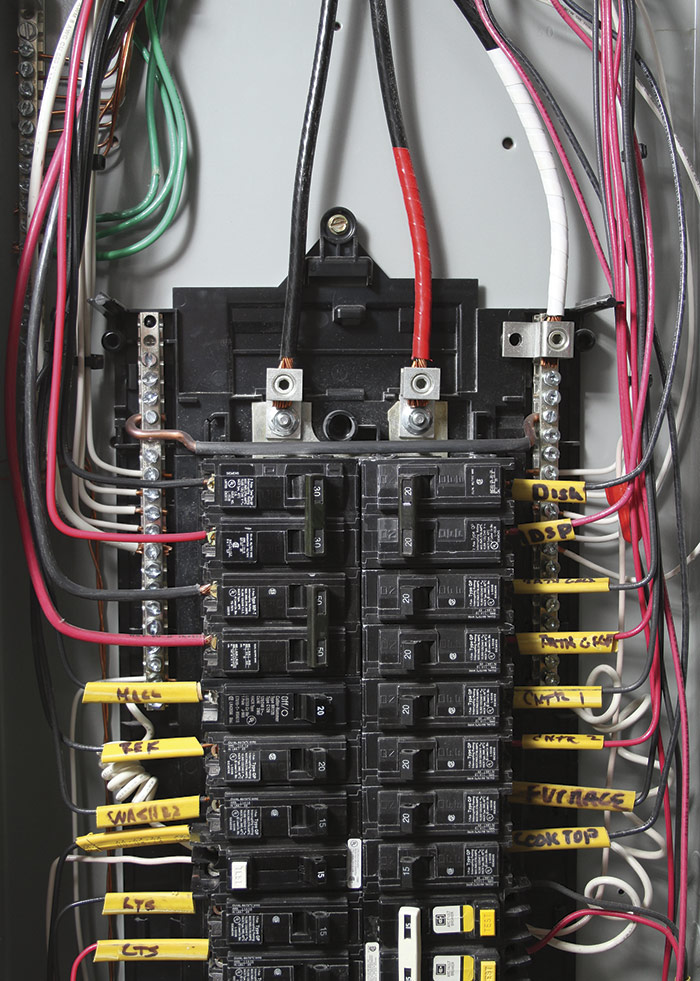
Licensed electrician checking a home electrical panel after knob and tube wiring was found during a home inspection

Buyers • Sellers • Owners

Pre-Sale and Buyer Inspections

An inspector who sees ceramic knobs, cloth-wrapped conductors, or ungrounded two-prong outlets will flag active knob and tube in the report and recommend evaluation by an electrician. Sellers who find it first can price and schedule the work. Buyers who find it late are negotiating against a closing date.

Insurance and Lender Inspections

Once the wiring is in a report, the buyer’s insurance carrier usually asks about it, and a separate insurance inspection may follow. If coverage cannot be bound, financing stalls. This is where a transaction that looked clean starts running out of days.

Your Practical Next Step

Get a licensed electrician into the attic and crawlspace before you negotiate. An electrical inspection tells you how many circuits are genuinely still on knob and tube, which decides whether this is targeted work or a larger rewire. From there you can price it, credit it, or complete it before closing.

Full vs. Partial Knob and Tube Replacement

Not every house with knob and tube needs every wall opened. Scope depends on how much of the old wiring is still energized, what your local building department requires, and what your insurer asked for in writing.

Partial Replacement

Targeted work on specific circuits or areas

Full Rewire

Replacing the home’s branch circuit wiring

Partial replacement is not automatically acceptable everywhere. Whether a limited scope is allowed depends on the condition of the existing system, your local building department, permit and inspection requirements, and what your insurance carrier will accept. When most of the house is still on active knob and tube, whole-house rewiring is usually more practical than replacing circuits a few at a time, and it is often the point where an electrical panel upgrade makes sense in the same project. We put both scopes in writing so you can compare them side by side.

OUR PROCESS

Our Knob and Tube Replacement Process

Eight steps from first look to final sign-off. You know what is happening, and why, at every one of them.

Step 1

Electrical Evaluation

We walk the attic, crawlspace, panel, and accessible junction points to see exactly what wiring is present and what condition it is in.

Step 2

Identify Active Circuits

Not all knob and tube is live. We separate energized runs from abandoned ones so the scope reflects what is actually feeding your outlets and lights.

Step 3

Determine Replacement Scope

You get a written scope and estimate covering what gets replaced, what stays, and what your local building department will require.

Step 4

Plan Access and Routing

We map wire routes through attic, crawlspace, and wall cavities to keep drywall cuts to a minimum and protect finished surfaces.

Step 5

Permitting

Rewiring is permitted through your city building department, or through OC Development Services in unincorporated areas. We file the application.

Step 6

Replace the Wiring

Our electricians run new grounded copper circuits, install updated devices and junction boxes, and land everything on a properly sized panel.

Step 7

Inspection and Testing

The city inspector reviews the work before walls close and again at completion. We test circuits under load and label the panel.

Step 8

Documentation and Walkthrough

You receive the final permit, an itemized invoice, and a walkthrough of what changed. That package is what insurers and escrow usually ask for.

⚡ Timelines move with the amount of active knob and tube, home size, and access. We give you a realistic schedule in writing before work starts. If a full rewire is the right scope, our guide on how to prepare for a whole house rewire covers what to expect at home during the project.

PERMITS & CODE

Orange County Permits and Electrical Inspection

Replacing branch circuit wiring is permitted work in Orange County. Each city runs its own process, so fees, forms, and turnaround differ, but the sequence is consistent.

Permit Application

Electrical permits are issued by the building department of the city where the home sits. Department names differ from city to city. Homes in unincorporated Orange County are permitted through OC Development Services. Requirements and fees vary by jurisdiction.

Rough Inspection

After new wiring is run but before walls and ceilings are closed, an inspector verifies routing, boxes, splices, and grounding. Work covered too early may have to be opened again.

Final Inspection

Once devices and the panel are complete, the inspector signs off and the permit is finalized. That final permit is the record insurers, buyers, and appraisers ask to see.

What Affects Knob and Tube Wiring Replacement Cost?

We do not publish a flat price for knob and tube wiring replacement, because the number moves with every factor above. For scale, Angi’s 2026 cost guide reports roughly $12,000 to $36,600 to replace knob and tube throughout a home, and about $100 to $350 for each outlet, switch, or fixture that has to be rewired. HomeGuide’s 2026 guide puts the same work at roughly $12,000 to $35,000, or about $100 to $300 per opening. Those are national averages. Orange County labor rates sit above them, and pre-1940 lath and plaster construction adds access and restoration work the averages do not account for. Use published figures as a range, never as a quote. For local context on full-home projects, see our guide to whole house rewire cost in Orange County. Your estimate is built from what we find in your house, in writing, before any work begins.

Why Homeowners Choose Pelican Coast Electric

What You Get

Why It Matters For Your Claim or Sale

COMMON QUESTIONS

Frequently Asked Questions About Knob and Tube Replacement

The questions homeowners ask before they decide on scope.

Does knob and tube wiring have to be replaced?

Not automatically. Existing concealed knob and tube is generally allowed to remain in service under the National Electrical Code and the California Electrical Code. New concealed knob and tube cannot be installed, and code restricts burying existing runs in loose, rolled, or foamed-in-place thermal insulation. California adds a narrow exception that lets insulation stay in place when a licensed electrical contractor certifies the wiring, and many cities require a signed report and posted warning signage at attic access points before they accept it. Replacement becomes mandatory in practice when your insurance carrier requires it, when a jurisdiction requires it as part of permitted work, or when the wiring is damaged, improperly spliced, or overloaded. A licensed electrician has to look at the system to tell you which of those applies to your house.

Sometimes, and it depends entirely on the carrier. Some insurers decline new policies on homes with active knob and tube. Some write coverage at a higher premium. Some renew an existing policyholder on the condition that the wiring is replaced by a licensed electrician within a set period. There is no single industry rule, so the notice from your own carrier is the document that matters. We inspect the system and document what is present and what was replaced so you have something concrete to send back.

In some cases, yes. If only a few circuits are still energized and they sit in an accessible area, replacing those circuits can be a legitimate scope of work. It is not universally acceptable. The condition of the remaining system, the permit and inspection requirements of your local building department, and what your insurance carrier will accept all affect whether a partial scope is the right answer. We price both a targeted scope and a full rewire so you can see the difference before you commit.

There is no flat rate. Angi’s 2026 cost guide puts full-home knob and tube replacement at roughly $12,000 to $36,600, or about $100 to $350 per outlet, switch, and fixture rewired. HomeGuide’s 2026 guide reports roughly $12,000 to $35,000, or about $100 to $300 per opening. Your number tracks the count of live knob and tube circuits, home size and layout, attic and crawlspace access, panel and grounding condition, permit fees in your city, and drywall repair afterward. Our whole house rewire cost guide covers local ranges for full-home projects in Orange County. For your house, the number comes from an on-site assessment and a written estimate.

It depends on scope. Replacing a handful of accessible circuits can be a short project. A full rewire of a single-family home is measured in days, and homes with tight attic or crawlspace access, multiple stories, or a panel upgrade in the same scope take longer. You get a schedule in writing before work starts, along with which areas lose power and when.

Yes. Replacing branch circuit wiring is permitted electrical work in Orange County. Permits are issued by your city building department, or by OC Development Services for unincorporated areas. An inspector reviews the work before walls are closed and again at completion. We file the permit, meet the inspector, and hand you the final permit paperwork at the end.

A home inspection is not pass or fail. Inspectors report conditions, and active knob and tube is a reportable condition that normally comes with a recommendation to have an electrician evaluate it. The practical consequence is not the report itself, it is what the buyer’s insurance carrier and lender do with it. That is why a licensed assessment early in escrow is worth more than an argument about the wording of the report.

REVIEWS

What Orange County Homeowners Say

Verified Google reviews from Pelican Coast Electric customers.

★★★★★

“From the very start, he was professional, honest, and upfront, giving me the best price right away… It’s rare to find such a genuine and trustworthy professional these days, and I highly recommend Austin for anyone in need of electrical work.”

Faraz MandegarianGoogle review · April 2025
★★★★★

“My condo was built in 1960s and its electrical circuits is different than newer buildings. Austin showed his expertise and figured it out very fast and he is trustworthy for your electrical work.”

Snow BallGoogle review · March 2025
★★★★★

“Pelican Coast Electric did an amazing job upgrading my electrical panel… They were professional, efficient, and super knowledgeable. If you’re in Orange County and need a panel upgrade, these are the guys to call!”

Mike P.Google review · March 2025

Get a Knob and Tube Wiring Replacement Estimate

Send over the notice from your insurer or the page from your inspection report. We will tell you what needs to be looked at and schedule an on-site assessment.

Schedule Your Free Estimate

Get a written estimate for knob and tube wiring replacement