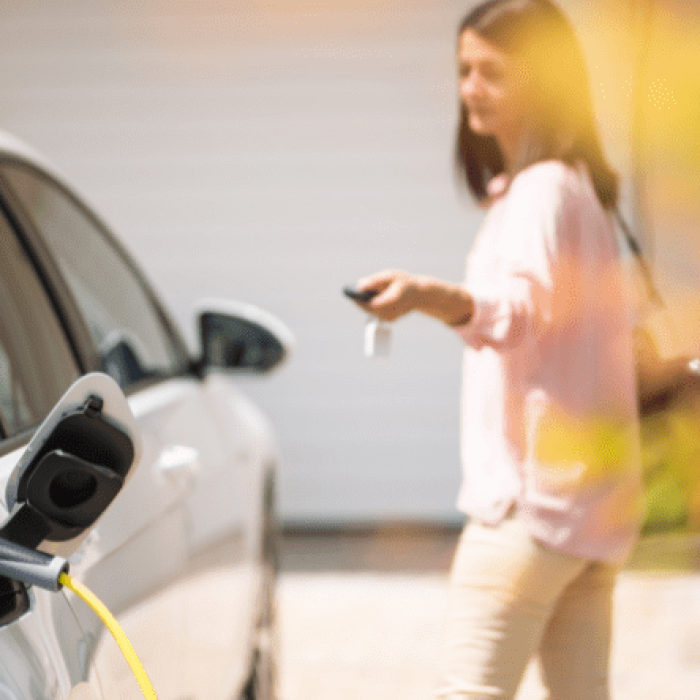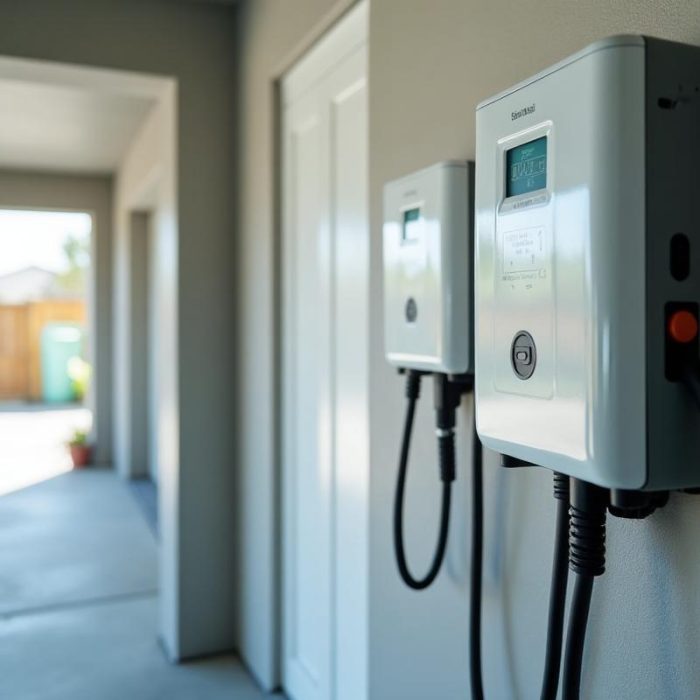

Pelican Coast Electric handles EV charger installation in Huntington Beach for homeowners who want fast Level 2 charging at home. Our licensed C-10 electricians check your panel capacity, file the City of Huntington Beach permit, run a dedicated 240V circuit, and mount your Tesla Wall Connector or universal charger. Free on-site estimates across Huntington Beach.

License #1133193

240V Home Charging

60+ Google Reviews

EV charger installation in Huntington Beach starts at the electrical panel, not the charger. Much of the city was built in the 1960s and 1970s, and many of those homes still run on 100-amp service. A Level 2 charger adds a 40 to 60 amp circuit to that panel. Our electricians run the load calculation first, then recommend the charger, circuit size, and location that fit your home. See our full EV charger installation service for residential and commercial work across Orange County.

Every estimate includes a load calculation on your existing service, so you know where you stand before you buy a charger.

California C-10 license #1133193, fully insured, with a permit and inspection on every charger we install.

We file the electrical permit with the City of Huntington Beach, meet the inspector, and close the permit for you.

Three local conditions shape most home charger installs here.
Older panels. Large parts of Huntington Beach went up during the 1960s and 1970s building boom. Many of those homes still have 100-amp service and a panel with no open breaker spaces. A 48-amp charger added to a full 100-amp panel trips breakers and does not pass the load calculation the city asks for.
Salt air. Homes west of Beach Boulevard and around Huntington Harbour sit in salt air year-round. Exterior meter panels, outdoor receptacles, and conduit fittings corrode faster here than they do inland. We check the condition of the panel before adding a 50 or 60 amp load, and we specify outdoor-rated equipment for driveway and carport installs.
Garage and parking layouts. Downtown lots often have detached, alley-loaded garages a long way from the main panel. Huntington Harbour homes have tight side yards. Condos and townhomes assign parking away from the unit’s meter. Each layout changes the wire run, the conduit route, and the price.
A site visit answers all three. You get a written scope showing the circuit size, the wire route, and whether your panel needs work first.
We install Level 2 chargers from Tesla, ChargePoint, and Leviton, plus other listed chargers you supply. Charger circuits tie into panels from Square D, SPAN, and other manufacturers.


Both options below charge on 240 volts. The difference comes down to charging speed, flexibility, and what your panel has room for.
A 240V outlet on a dedicated 50-amp circuit. You plug in the mobile charger that came with your car or a plug-in wall unit.

A wall-mounted charger wired straight to a dedicated circuit. The fastest home charging option and the most durable install near the coast.
Most of our Huntington Beach charger work is residential, from single-family garages near Edwards Hill to assigned parking stalls in condo and townhome communities.


Homeowners working to a tighter budget often start with a NEMA 14-50 outlet and move to a hardwired charger when a second EV arrives. Own or manage a commercial property? See our commercial electrician in Huntington Beach page for workplace and tenant charging.
Capacity follows load, not the number on your main breaker. Our electricians run a load calculation on your actual panel before quoting anything. The City of Huntington Beach asks for the same calculation with the permit application.
100-amp service. Common in Huntington Beach homes built before the 1980s. A full-speed 48-amp charger rarely fits. Your options are a lower-amperage charger, a load management device that pauses charging when the house draws heavily, or a service upgrade.
125 to 150-amp service. Often has room for a 32 or 40-amp charger once the calculation is done. Gas appliances help. Electric ranges, dryers, air conditioning, and spa equipment use up headroom fast.
200-amp service. Handles a 48-amp charger in most homes, and two chargers with power sharing in many. The panel still needs open breaker space and a clean calculation.
No open breaker spaces. A subpanel solves a space problem. A subpanel does not add capacity.
When the math says upgrade, we handle the electrical panel upgrade, coordinate the service change with Southern California Edison, and install your charger once the new service is live.
The Tesla Wall Connector delivers up to 48 amps and 11.5 kW on a 60-amp circuit. Tesla rates that at up to 44 miles of range per hour of charging. The Universal Wall Connector adds a built-in J1772 adapter, so one unit charges a Tesla and a non-Tesla EV. We size the circuit to your panel, mount the unit indoors or outdoors, and set up power sharing when you add a second Wall Connector. Driving another brand? Our main EV charger installation page covers universal charger options across Orange County.
Four steps, from the first visit to your first full charge at home.

Site Visit & Load Calculation

A licensed electrician checks your panel capacity and condition, measures the wire run from the panel to your parking spot, confirms the charger location, and hands you a written estimate.

City Permit & HOA Approval
We file the electrical permit with the City of Huntington Beach through the HB ACA online portal, with the site plan, the charger spec sheet, and the load calculation the city asks for. We prepare drawings for your HOA when your community requires approval.

Professional Installation
Crews install the breaker, run conduit and wire for a dedicated 240V circuit, mount the charger or receptacle, and complete the work to the current California Electrical Code.

Inspection & Walkthrough
We meet the city inspector, test the charger with your vehicle, connect the unit to Wi-Fi, and show you how to schedule off-peak charging.
Typical timeline: 4 to 8 hours on site for most Huntington Beach home installs, plus city permit review time. Jobs with a panel upgrade take longer.
Straight answers to what Huntington Beach homeowners ask us most.
Your price depends on your home, so we quote after we see it. Four things set the cost: the distance from the panel to the charger, the circuit size, the capacity and condition of your panel, and whether the run goes through finished walls, an attic, or a trench to a detached garage. Homes that need a panel upgrade or an SCE service change cost more. A licensed electrician runs the load calculation on site and gives you a free, written estimate before any work starts.
Yes. The City of Huntington Beach requires an electrical permit for a Level 2 charger circuit. The Building Division publishes EV charger guidelines for single-family homes calling for a site plan, the manufacturer’s specifications, and an electrical service load calculation. Applications go through the city’s HB ACA online portal or the Permit Center at City Hall, 2000 Main Street. We file the application, schedule the inspection, and close the permit as part of the install.
Sometimes. A load calculation decides. Homes with gas cooking, gas heat, and a gas dryer often have room for a 24 or 32-amp charger on 100-amp service. Homes with an electric range, air conditioning, or a spa usually do not. A load management device lets the charger share capacity by pausing when the house draws heavily. When neither option works, a panel upgrade to 200 amps solves the problem.
Most Huntington Beach home installs take 4 to 8 hours on site when the panel has capacity. Add a day or more for a panel upgrade, a long conduit run, or trenching to a detached garage. City permit review happens before the crew arrives, so ask us for a full calendar timeline at the estimate.
Yes. We install the Tesla Wall Connector and the Universal Wall Connector on circuits up to 60 amps, which supports the full 48-amp charging rate. We also install NEMA 14-50 outlets for the Tesla Mobile Connector. For a home with two EVs, Tesla’s power sharing lets two Wall Connectors split the available capacity without overloading the panel.
Hardwire for speed and durability. A hardwired charger delivers up to 48 amps, has no plug connection to wear out, and suits outdoor installs in salt air. Choose a NEMA 14-50 outlet when you want to use a mobile charger, plan to move, or want the lower upfront cost. Plug-in charging tops out at 40 amps, and current code calls for GFCI protection on the receptacle.
In most cases, yes. California Civil Code 4745 limits an HOA’s ability to prohibit a charger in an owner’s designated parking space. The association still sets reasonable rules on installation, insurance, and who pays for the electricity. We prepare the drawings and load information your HOA board or architectural committee asks for, then pull the city permit.
Incentives change often. Per the IRS, the federal 30C charger tax credit applied to equipment placed in service through June 30, 2026, so installs after that date do not qualify. Southern California Edison offers time-of-use rate plans built for EV owners, including TOU-D-PRIME, which lower the cost of overnight charging. Check SCE’s rebate page for current programs before you buy, and talk to your tax advisor about your own return. We are electricians, not tax advisors.
Every Pelican Coast Electric installation meets the California Electrical Code and City of Huntington Beach building standards.

Dedicated circuits sized at 125% of the charger's continuous load, the correct wire gauge for the run, and GFCI protection where code requires.

Work meets the current California Electrical Code as adopted by Huntington Beach, with a permit and inspection on every job.

Licensed C-10 electricians, license #1133193, with permits, inspections, and complete documentation handed to you at closeout.

Salt air is hard on outdoor electrical equipment. Homes near the Pier, along Pacific Coast Highway, and around Huntington Harbour see faster corrosion on enclosures, fittings, and terminals than homes east of Beach Boulevard.
We plan for the coast. Outdoor chargers get a weather-rated enclosure, sealed conduit entries, and corrosion-resistant fittings. Where the layout allows, we mount the charger inside the garage or under cover and route the cable to your driveway.
Outdoor receptacles take the most abuse. A plug-in charger left outside puts a 32 to 40 amp load through contacts exposed to moisture and salt. For driveway and carport charging near the water, we recommend a hardwired charger.
EV charger installation across Huntington Beach and neighboring cities, dispatched from our Newport Beach office.


Reviews from homeowners across Orange County.
Ready to charge at home? Our licensed electricians provide free, no-obligation estimates for EV charger installation throughout Huntington Beach. Need general electrical work instead? See our electrician in Huntington Beach page.
Get a personalized quote for your Huntington Beach EV charger installation.