
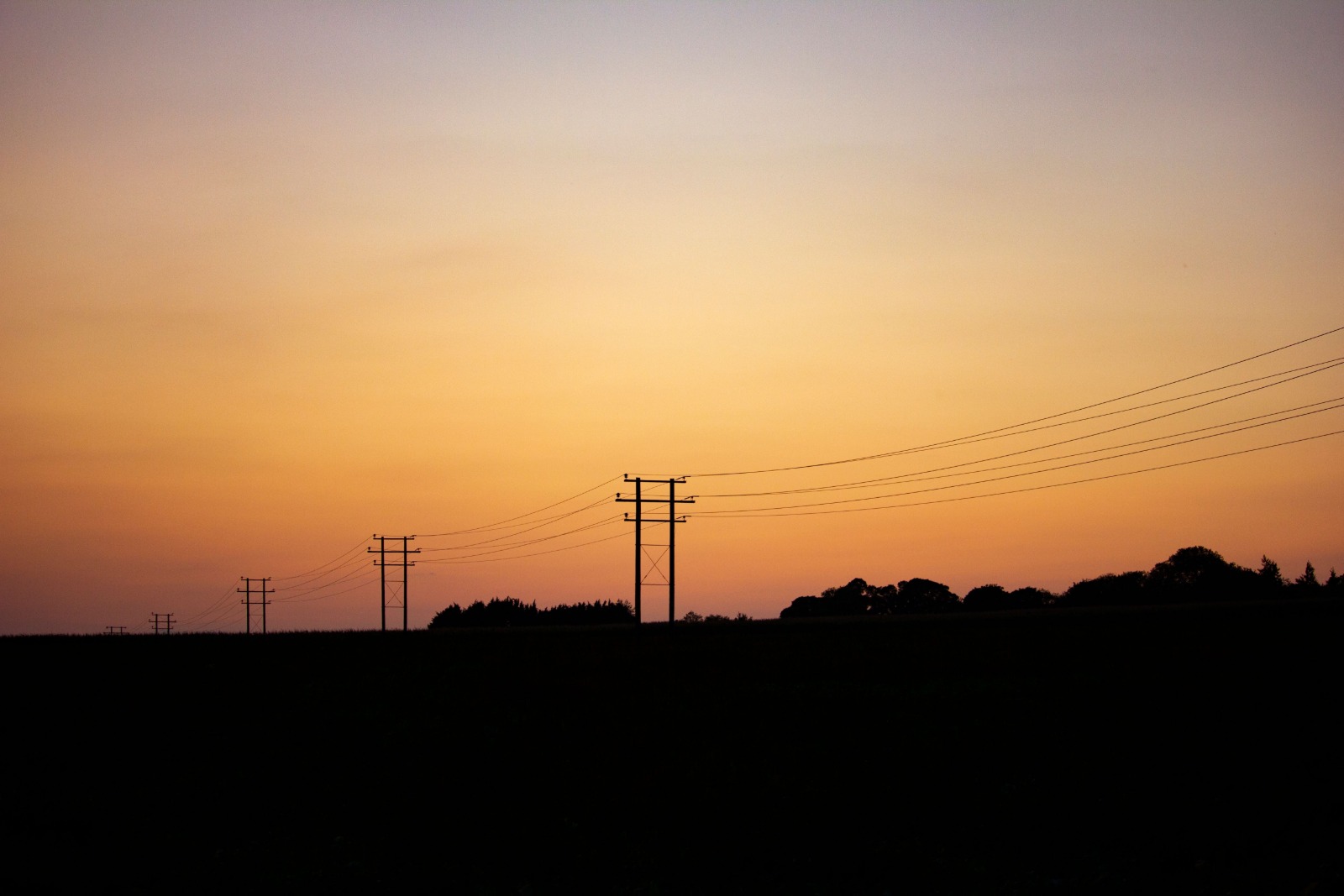
Southern California Edison sometimes turns off power on purpose. When strong wind, low humidity, and dry brush line up, SCE de-energizes circuits in its highest fire risk areas to keep its equipment from starting a fire. The utility calls this a Public Safety Power Shutoff, or PSPS.
For Orange County homeowners, the useful question is not whether SCE runs these events. It is whether your address sits on a circuit SCE would shut off, how much warning you get, and what happens inside your house when the power stops. This guide covers all three, plus the electrical work behind a home that handles a shutoff well.
What an SCE Public Safety Power Shutoff Actually Is
SCE defines a PSPS as a temporary shutoff of power “to reduce the risk of its equipment causing a fire.” A storm outage is a failure. A public safety power shutoff is a decision made in advance, while the lights are still on.
The California Public Utilities Commission, which regulates SCE, treats de-energization as a measure of last resort. Utilities file a report with the CPUC within 10 days of every shutoff event.
Why SCE Cuts Power on Purpose
Santa Ana wind moves overhead lines, throws debris into them, and breaks branches onto conductors. A line that arcs or falls into dry brush becomes an ignition source. De-energizing the circuit removes that ignition source while conditions are at their worst.
How SCE Decides Which Circuits Go Dark
SCE weighs a set of field conditions before de-energizing:
- Strong winds
- Low humidity
- Dry vegetation available as fuel
- Real-time readings from pole-top weather stations across the territory
Decisions land at the circuit level, not the city level. Your street goes dark while a neighborhood two miles away stays energized. Two homes on opposite sides of the same canyon road sometimes sit on different circuits.
How Much Warning You Get Before an SCE PSPS
SCE works to a published notification sequence. Early notices describe a possibility. Later ones describe a decision.
The SCE Notification Timeline
- 4 to 7 days out: predictive weather modeling begins
- 3 days out: initial customer notification
- 2 days out: refined list of circuits under consideration
- 1 day out: further refinement of the impacted areas
- 1 to 4 hours before: expected shutoff notification
- At shutoff: power shutoff notification
- Before restoration: inspection notification
- After inspection: restoration notification
Note the last stretch. Between the three-day warning and the shutoff itself, your practical window is one to four hours. Anything you want installed, tested, or fueled gets handled long before the notice arrives.
Check Your Own Address, Not the Headline
News coverage names counties and regions. SCE shuts off circuits. Look up your address on the SCE PSPS page and outage map, and register for address-level alerts at scepsps.com. Renters and household members who are not the account holder register the same way, which matters across Orange County rental and vacation properties.
How Long an SCE PSPS Lasts
SCE states that PSPS events sometimes run more than 24 hours. Two clocks decide the length.
Why Power Does Not Return the Moment the Wind Drops
The first is weather. Circuits stay off while dangerous conditions hold. The second is inspection. Before re-energizing, crews patrol the lines for damage. SCE says those inspections typically take up to eight hours, and longer when daylight is required for ground or aerial patrols.
A shutoff that starts Tuesday evening during a wind event ending at dawn does not come back at dawn. Plan for the weather window plus most of a working day.
SCE opens Community Resource Centers and sends Community Crew Vehicles during events, offering charging, Wi-Fi, water, and ice. Useful for a phone battery. Not a solution for a full refrigerator or a home office.
Which Orange County Homes Sit in the Risk Zone
SCE serves most of Orange County, including Newport Beach, Costa Mesa, and Irvine. Fire risk inside that territory is not spread evenly.
SCE de-energizes circuits in what it designates as its highest fire risk areas. The terrain that carries that kind of exposure in Orange County is hillside and canyon: long overhead runs, mature vegetation, and Santa Ana wind funneled through the canyons. Newport Coast, the Laguna Beach canyons, Anaheim Hills, Yorba Linda, Coto de Caza, and the Silverado, Modjeska, and Trabuco canyons all sit in terrain of that type. Whether your own address sits on a circuit SCE would shut off is a question for SCE’s map, not for a rule of thumb.
Terrain is not a determination. Wind causes ordinary outages through line damage anywhere in the county, and re-energizing a circuit after any outage is a recognized source of voltage transients. Look up your address rather than reasoning from your city.
What a Shutoff Does Inside Your Home
The outage itself is inconvenient. The electrical damage happens at the edges.
What Happens When Power Comes Back
Re-energizing a circuit is a recognized source of voltage transients. Sensitive equipment left plugged in is what they reach first: HVAC control boards, refrigerator compressors, computers, televisions, smart panels, and low-voltage control gear. Damage does not always appear immediately, which is why a failure weeks later often goes unconnected to the outage.
Systems That Fail Quietly
- Refrigerators and freezers, with food loss climbing after the first several hours
- Security cameras and alarm systems once the small internal battery drains
- Wi-Fi, cell boosters, and the rest of the home office
- Garage door openers, gates, and well pumps on canyon properties
- EV charging, which stops the moment the circuit drops
- Powered medical equipment
If someone in your household relies on powered medical equipment, enroll in SCE’s Medical Baseline program before fire season. SCE attempts to reach enrolled customers through their preferred contact method during an event, and sends a technician to the door when direct contact fails.
Electrical Work That Reduces the Impact of a Shutoff
No electrical system removes the possibility of an outage. The goal is a shorter, quieter, less damaging one.
Standby Generator and Transfer Switch
A permanently installed standby unit paired with a transfer switch restores selected circuits within seconds of a shutoff, with no cords and no manual startup. Circuit selection is where the design work happens. A well-planned installation covers refrigeration, essential lighting, well and sump pumps, network gear, and one comfort zone rather than the entire house.
See generator installation and transfer switch installation for how the two work together. Sizing matters more than brand, and our guide on what size whole house generator you need walks through the load math.
Battery Backup
Battery systems run silently, need no fuel delivery, and suit shorter outages and smaller critical loads. Grid-tied solar without a battery shuts down during an outage for line-worker safety, so panels alone leave a PSPS-affected home dark. Pairing storage with existing panels changes the outcome.
Whole-Home Surge Protection
A panel-mounted device clamps the restoration spike before it reaches your equipment. Against an event that damages several appliances at once, whole-home surge protection is among the least expensive upgrades in the house.
Panel and Load Review
Backup power lands on top of your existing service. An undersized or aging panel limits what a generator or battery serves and complicates permitting. An electrical inspection establishes what your service supports today, and an electrical panel upgrade resolves the gap when one exists.
The CPUC advises customers to contact their utility before connecting backup power directly to home wiring, so the installation meets safety and interconnection requirements. Permitted, code-compliant work covers that step.
What to Do Before the October Wind Season
- Look up your address on SCE’s outage map and register for alerts at scepsps.com.
- Enroll in Medical Baseline if anyone in the home depends on powered equipment.
- List the loads to keep live: refrigeration, medical, water, network, security.
- Book an electrical inspection to confirm what your panel and service support.
- Add whole-home surge protection if the panel lacks it.
- Schedule generator or battery installation early, since permitting adds weeks.
- Test existing backup equipment under load rather than assuming it starts.
Lead times stretch every September and October. Work booked now finishes before the first red flag warning of the season.
How Pelican Coast Electric Prepares Orange County Homes
We start with your service, not a product recommendation. An inspection covers the panel, grounding, wiring condition, and load capacity. From there you get a straight assessment of which circuits deserve backup and what each option costs in permits and installation time. Licensed, insured crews, California electrical code, systems tested under load before we leave.
Frequently Asked Questions About SCE Public Safety Power Shutoffs
Does SCE warn you before a Public Safety Power Shutoff?
Yes. SCE notifies customers roughly three days ahead, refines the circuit list at two days and one day, then sends an expected shutoff notification one to four hours before power stops. Further notices follow at shutoff, before inspection, and at restoration.
How long does an SCE PSPS last?
SCE states events sometimes exceed 24 hours. Circuits stay off while dangerous weather holds, then crews inspect the lines before re-energizing. SCE says those inspections typically take up to eight hours, and longer when daylight is needed for ground or aerial patrols.
Where is the SCE PSPS map?
SCE hosts an outage map with address lookup on its Public Safety Power Shutoff page, and address-level alerts at scepsps.com. Anyone in the household registers, account holder or not.
Is a PSPS the same as a rolling blackout?
No. A rolling blackout responds to a shortage of electricity supply. A public safety power shutoff responds to wildfire risk from utility equipment during extreme weather. Different cause, different trigger, different season.
Is my Newport Beach or Costa Mesa home likely to be shut off?
SCE makes that determination circuit by circuit, and circuit boundaries do not follow city lines. Look up your specific address on SCE’s outage map rather than reasoning from your city.
Will a standby generator run during an SCE shutoff?
A properly installed standby generator with an automatic transfer switch starts on loss of utility power and carries the circuits it was designed to serve, whatever stopped the grid. Correct sizing and regular maintenance determine how well it performs.
Do solar panels keep my home powered during a PSPS?
Grid-tied solar without battery storage shuts down during an outage to protect line workers. Adding a battery system allows a home to draw on stored solar energy while the grid is down.
Do I need a permit to install a generator in Orange County?
Requirements vary by jurisdiction and by the type of installation. A permanently installed generator and transfer switch generally calls for an electrical permit and inspection, and a gas or propane connection usually adds a separate permit. Your city or county building department sets the specifics. We confirm what applies at your address and handle the permitting as part of the installation.
Get Ready Before the Next SCE Shutoff
PSPS events arrive on a schedule set by wind, not by convenience. The homes that come through a multi-day shutoff in good shape are the ones where the electrical work happened months earlier. Pelican Coast Electric serves homeowners throughout Orange County with electrical inspections, panel upgrades, surge protection, and backup power sized to how your home uses electricity.
Call Pelican Coast Electric today or schedule an electrical inspection to get your home ready before the next shutoff.