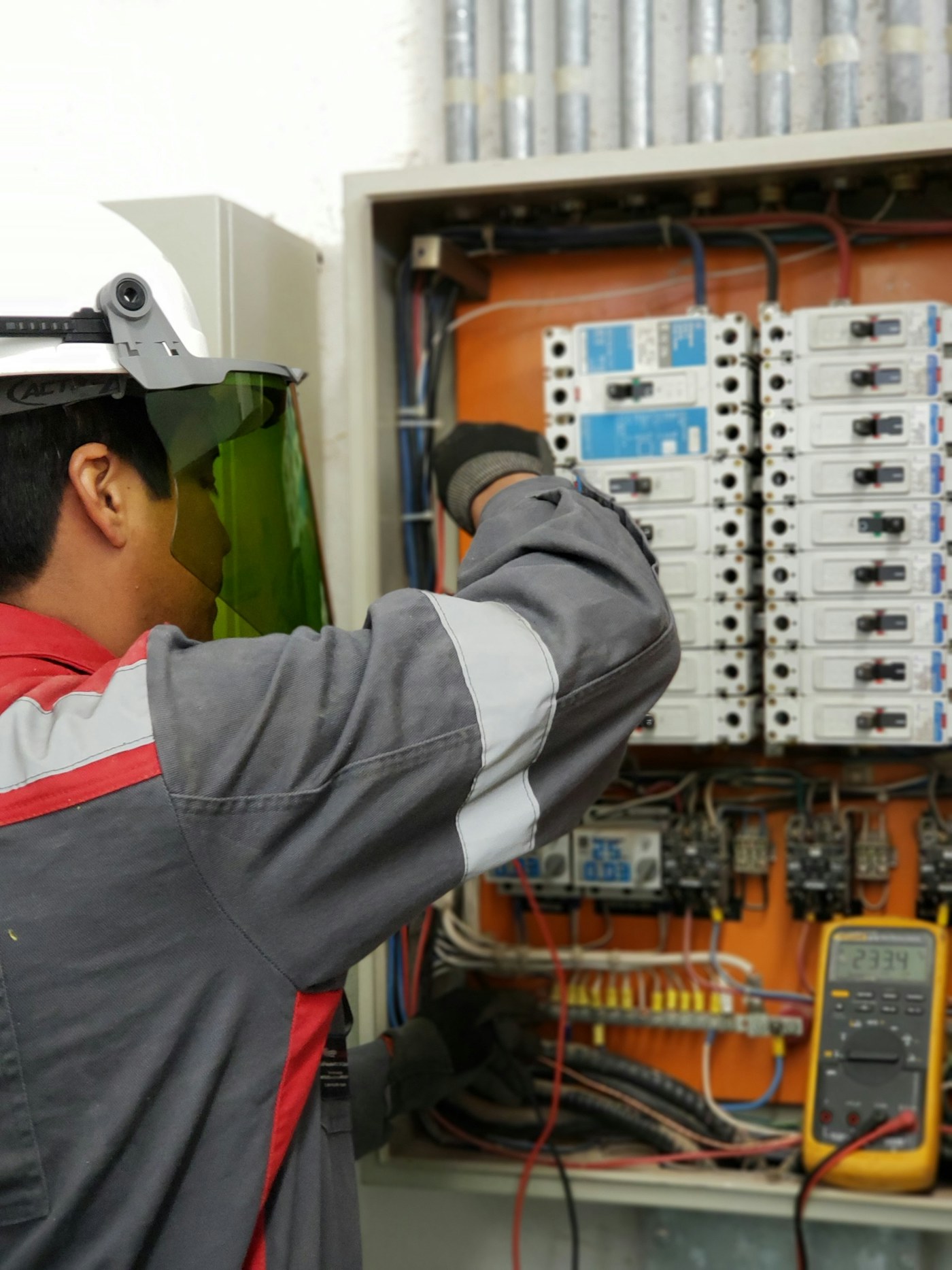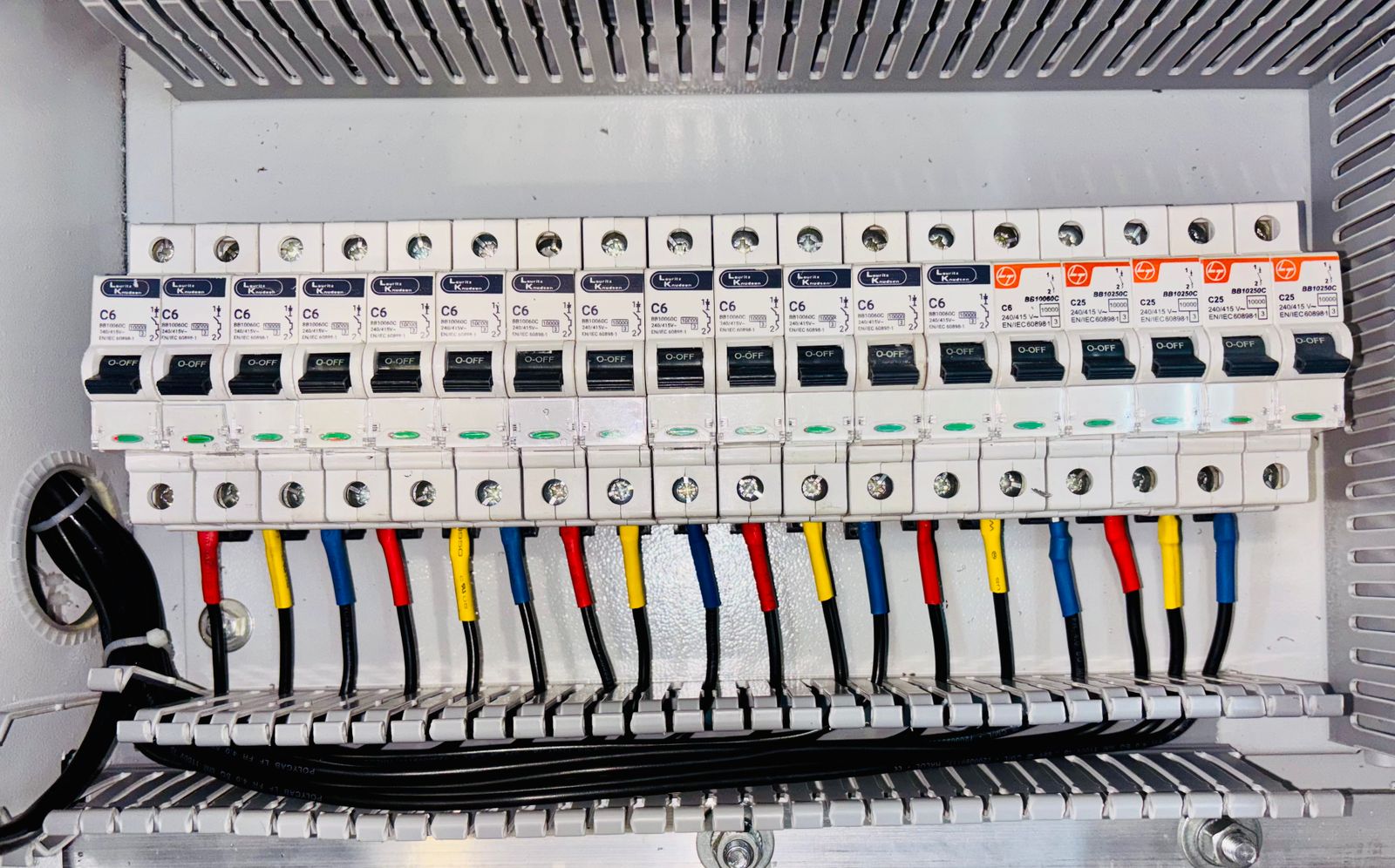
One breaker keeps tripping, will not reset, feels hot or buzzes. Most of the time the fix is a single circuit breaker replacement, not a new panel.

Electrical Projects Completed
Service Available

& Insured

A circuit breaker is a switch built to trip when a circuit draws more current than the wire handles safely. Breakers wear out. Springs weaken, contacts pit, and the connection to the bus bar loosens. A failing breaker shows up in one of four ways.
You push the handle to off, then back to on, and the handle flops loose or trips again at once. Either the breaker has failed, or the circuit has a short or a ground fault. Testing tells the two apart.
Slightly warm under heavy load is normal. Too hot to keep a finger on is not. Heat points to a loose connection, a worn contact or an overloaded circuit.
A faint hum from a loaded breaker is common. A loud buzz, a crackle or a sizzle means arcing at the breaker or the bus. Switch the breaker off and call.
A breaker tripping when the microwave and the toaster run together is doing the job. A breaker tripping with almost nothing plugged in is worn, or the circuit has a fault.
A licensed electrician tests the circuit, confirms the breaker is the fault, and installs a matching replacement. Pelican Coast Electric replaces circuit breakers across Orange County, with same-day appointments available.
A burning smell, scorch marks or melted plastic at the panel is urgent. Leave the breaker off and see our emergency electrician page.

One failing breaker on a healthy bus is a breaker job. Several failing breakers, a scorched bus or an obsolete brand is a panel job. Testing settles which.

All circuit breaker work is completed by licensed, insured California electricians, following the California Electrical Code.

Rated 5.0 across 50+ customer reviews. You get a fixed price before work starts, and you see the old breaker and hear what failed before we leave.

Replacing a breaker fixes a bad breaker. A new breaker does not fix a bad circuit or a bad panel. So every call starts with diagnosis, and four outcomes cover most of them.
The circuit tests clean, the load sits under the breaker rating, and the breaker still trips or fails to hold. We replace the breaker with a matching listed unit. This is the most common result.
A 15 amp bedroom circuit feeding a space heater, a window air conditioner and a vacuum trips a new breaker as fast as the old one. The fix is moving load or adding a dedicated circuit, never a bigger breaker on the same wire.
A short, a ground fault or a damaged cable trips the breaker at once, every time. A new breaker changes nothing. We trace the fault under our electrical repair service, fix the cause, then check whether the breaker took damage too.
Burn marks on the bus bar, corrosion, loose breakers, or several circuits acting up together point past the breaker. In those cases a new breaker is money spent on the wrong part.
One visit separates these four. You hear which one you have before any part goes in.

Most Orange County homes run on a 100 to 200 amp panel holding 20 to 40 breakers. We replace every common type: single-pole 15 and 20 amp breakers for lights and outlets, double-pole 30 to 60 amp breakers for dryers, ranges, air conditioners and EV chargers, and AFCI, GFCI and dual-function breakers. The main breaker shuts off the whole panel and takes more labor.
What circuit breaker replacement costs. Every quote follows a look at the panel, so treat these as planning ranges. National cost guides put a standard single-pole breaker at about $100 to $180 installed and a double-pole breaker at about $180 to $260. A main breaker runs about $200 to $600 or more. AFCI and GFCI breakers cost more than standard ones. Orange County labor sits above the national average.
Four factors move the number: breaker type and amperage, panel brand, after-hours timing, and anything the diagnosis turns up, like a burned wire end. You get a fixed price before work starts.

A tripped breaker in a restaurant, an office or a retail suite stops revenue. Commercial panels use bolt-on and three-phase breakers, which no home center stocks. Each replacement has to match the panel listing, the voltage and the interrupting rating.
We replace single-phase and three-phase breakers in tenant suites, restaurants, offices, warehouses and HOA common areas. We schedule around business hours where the shutdown allows, and we document each replacement with the breaker rating and the test results.
From first test to restored power, most circuit breaker replacements finish in one visit. Same-day appointments are available across Orange County, subject to the schedule on the day you call. Breakers for older or discontinued panels sometimes need to be ordered, and we tell you on the first visit.

Diagnosis & Circuit Testing
We test the breaker, the circuit and the load before quoting. You learn whether the breaker, the circuit or the panel is at fault, and you get a fixed price.

Matching the Breaker
Breakers are not interchangeable across brands. We match the replacement to your panel listing, the amperage, the pole count and the protection type.

Safe Replacement
Power to the circuit goes off. The old breaker comes out, the bus connection and the wire end get inspected, and the new breaker is seated and torqued to spec.

Testing & Walkthrough
We restore power, test the circuit under load and update the panel directory. You see the old breaker and hear what failed.
⚡ Typical timeline: 30 to 60 minutes on site for a standard breaker. Main breakers take longer and often need a utility shutoff.
Get answers to the most common questions about circuit breaker replacement
The handle will not reset or stay on. The breaker trips with little or no load. The breaker feels hot, buzzes or crackles. A burning smell or scorch marks at the panel are urgent. A meter test at the panel confirms whether the breaker or the circuit is at fault.
National cost guides put a standard single-pole breaker at about $100 to $180 installed, a double-pole breaker at about $180 to $260, and a main breaker at about $200 to $600 or more. Treat these as planning ranges. Orange County labor sits above the national average, and breaker type, panel brand and after-hours timing move the number. You get a fixed price before work starts.
Yes. Same-day appointments are available across Orange County, subject to the schedule on the day you call. Breakers for older or discontinued panels sometimes need to be ordered. If a breaker is hot, smells of burning or shows scorch marks, switch the breaker off and call us right away.
Three causes cover most cases. The circuit is overloaded, so the breaker trips after a few minutes of heavy use. The circuit has a short or a ground fault, so the breaker trips the moment you reset. Or the breaker is worn. Unplug everything on the circuit and reset once. If the breaker trips again with nothing connected, stop resetting and call an electrician.
We do not recommend doing this yourself. Parts of the panel stay energized with the main breaker off, and a breaker from the wrong brand often fits the slot without making sound contact with the bus. A licensed electrician also tests the circuit first.
The city and the exact scope decide. Newport Beach states some electrical repairs need a permit and some do not, and directs owners to check with the Building Division. The same rule covers a single like-for-like breaker. Panel replacements, service upgrades and new circuits do require a permit. We confirm the requirement with your city before work starts.
When the fault sits in the panel and not in the breaker. Signs include a burned or corroded bus bar, several breakers failing together, or a panel in poor condition on inspection. Zinsco, Federal Pacific, Challenger and Pushmatic panels get a closer look. Original breakers for those brands are out of production, and listed replacements exist for some models. We check panel condition, breaker compatibility and safety, then price both options before you decide.
A breaker replacement looks simple. The risk sits behind the cover.

A breaker must be listed for the panel taking the part. A breaker from another brand often fits the slot and still makes poor contact with the bus. Poor contact makes heat.

14 AWG copper gets a 15 amp breaker. 12 AWG copper gets a 20 amp breaker. Upsizing a breaker to stop nuisance trips removes the protection the wire depends on.

A breaker running hot often leaves a pitted or discolored bus connection. A new breaker on a damaged connection fails early.

Sometimes a new breaker is the wrong fix. We recommend replacing the panel when the bus bar is burned or corroded, when several breakers fail together, or when the panel is a Zinsco, Federal Pacific, Challenger or Pushmatic. Original breakers for those four brands are out of production. See our Zinsco and Federal Pacific panel replacement page. If the panel is sound but too small for your load, see electrical panel upgrades and replacement.
All work follows the California Electrical Code, performed by licensed, insured California electricians under CA License #1133193.


Real reviews from satisfied customers across Orange County.
Tell us what the breaker is doing. Tripping at once, refusing to reset, running hot or buzzing. We tell you the likely fix and what a replacement costs before we start. Related services: electrical repair, electrical panel upgrades and replacement, Zinsco and Federal Pacific panel replacement and sub panel installation.
Get a personalized quote for your circuit breaker replacement