
Pelican Coast Electric is the C-10 field partner behind your arc flash study. We collect and verify the field data your engineer needs to model incident energy, implement the protective device settings the sealed study calls for, and label every piece of equipment so your team knows what it is working on before the door opens.
An arc flash study calculates how much incident energy an arc would release at each point in your distribution system. Those calculations run on a model, and the model runs on field data. Conductor sizes and lengths. Transformer impedance and nameplate values. Utility available fault current. Every protective device in the path, with its make, model, and the settings it is actually running today rather than the settings someone recorded a decade ago.
Most study problems trace back to this stage. A single-line diagram drawn during construction stops matching the building the first time a tenant improvement adds a panel. A relay gets adjusted during a troubleshooting call and nobody updates the file. When the model is built on paper records instead of verified field conditions, the incident energy numbers on your labels are wrong, and the PPE decisions your team makes from those labels are wrong with them.
Our crews walk the system and document what is really installed. We work alongside the licensed professional engineer who performs the modeling and seals the study, then handle the field work on the other side of it. If your equipment needs testing before the study, our high voltage electrical testing and high voltage cable testing services cover transformers, switchgear, and cable circuits.
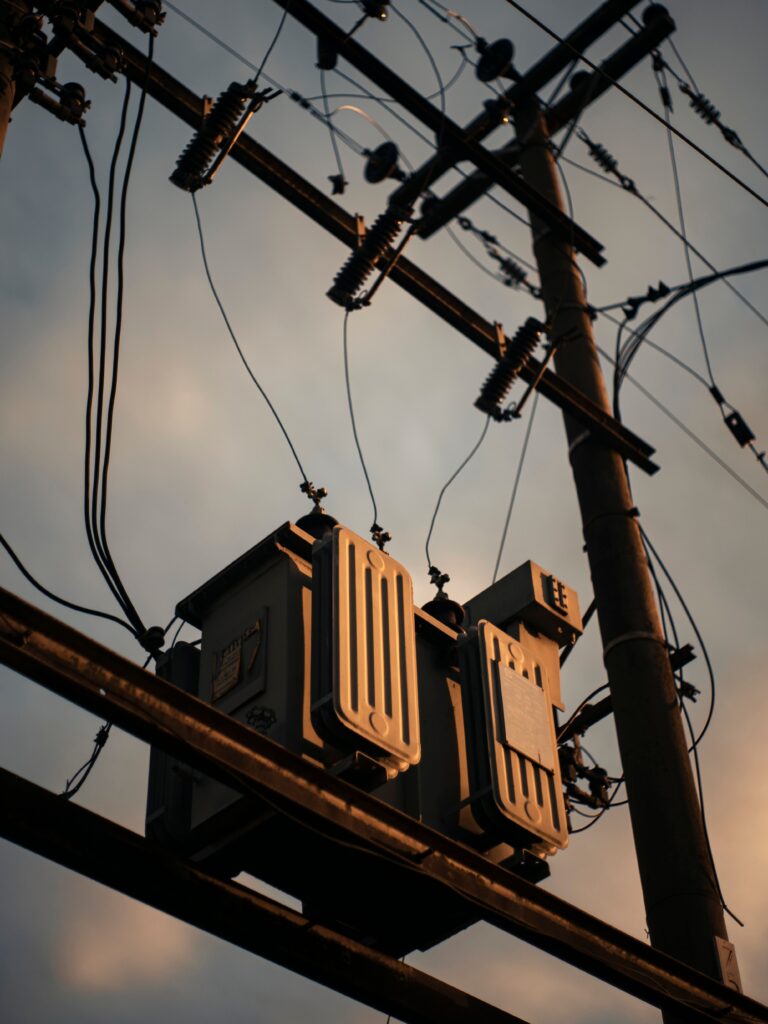
NFPA 70E requires employers to assess arc flash risk before workers interact with energized equipment. NEC 110.16 requires field marking on equipment likely to need examination or servicing while energized. OSHA enforces the underlying duty to protect workers from recognized electrical hazards. An arc flash study is how a facility answers all three with numbers instead of assumptions.
The practical benefits show up sooner than an audit. Labeled equipment tells an electrician which PPE category applies before the panel cover comes off. A coordination review often finds a breaker set to trip slower than it needs to, which drives incident energy up for no operational reason. Correcting settings frequently drops a piece of equipment into a lower PPE category, which means faster work, fewer shutdowns, and a smaller chance of somebody deciding the suit is not worth the trouble.
Insurers and general contractors increasingly ask for a current study before they will write coverage or accept a commissioning package. Property managers bidding tenant work run into the same request. After an incident, the first question asked is what the employer knew about the hazard and when. A sealed study, current labels, and a field record of every settings change form the answer.
If any of the following describe your site, the labels on your gear are probably no longer accurate, and the PPE decisions your electricians make from them are running on stale numbers. A scoping walk settles it quickly.
No arc flash labels on switchgear, switchboards, panelboards, or motor control centers.
Labels present, but printed more than five years ago and never revisited.
Service upgrade, new transformer, generator, or utility change since the last study.
Tenant improvements, added panels, or a reconfigured feeder that never made it onto the single-line.
Protective device settings adjusted in the field with no record of the change.
Solar, battery storage, or a new backup source added to the distribution system, or an insurer asking for current documentation.
Coordination is the half of an arc flash project with the most operational upside. The study models how quickly each protective device clears a fault, and clearing time drives incident energy more than almost anything else on the system. A main breaker set with a long time delay to avoid nuisance tripping produces a much higher incident energy value at the gear below it.
Three variables drive the incident energy number printed on a label. Available fault current at the equipment, which comes from the utility source and the impedance of everything between it and the gear. Clearing time, which is set by the upstream protective device and its settings. Working distance, which is fixed by the equipment geometry and the task. Of the three, clearing time is the one a facility has real control over.
The engineer identifies where selectivity and clearing time work against each other and recommends a settings scheme. Our field crews implement it. That work covers programming electronic trip units and protective relays, changing fuse classes and ratings, adding maintenance switch or energy-reducing settings where the equipment supports them, and retrofitting devices where the existing hardware will not deliver the required curve.
Every change is recorded as found and as left, then verified against the sealed study so your documentation and your equipment agree. Facilities running ongoing electrical work often bring us in through our commercial electrician services, then add arc flash support once a study is on the calendar.
We walk your distribution system from the service entrance down, list every piece of equipment in scope, and confirm access and shutdown windows. You get a defined equipment count before anyone quotes engineering hours.
Our technicians record nameplate data, conductor sizes and lengths, transformer values, and the as-found settings of every protective device. We correct the single-line diagram against what is installed and hand the verified package to your engineer.
Once the study is sealed, we implement the recommended protective device settings, replace or retrofit devices where the coordination analysis calls for it, and document every change against the sealed report as found and as left.
We produce and install arc flash labels matching the sealed study, verify the installed configuration one more time, and hand over a documentation package your safety program uses directly, each label mapped to its study line item.
We cover the field side of an arc flash project end to end, from the first walk through your electrical rooms to the labels installed on the gear. Each capability below feeds the next, which is why running them under one contractor keeps the engineering hours down and the schedule honest.
Nameplate capture, conductor and raceway documentation, transformer data, and equipment photography across the full distribution system.
We field-verify existing drawings, mark up the differences, and produce an accurate as-built single-line for the study model.
Make, model, frame and trip ratings, fuse types, relay models, and as-found settings recorded device by device.
Transformer turns ratio and winding resistance, insulation resistance, cable diagnostics, and ground resistance testing where the study needs verified values.
Relay and trip unit programming, breaker and fuse changes, and current-limiting device installation per the sealed study.
Durable arc flash labels produced to ANSI Z535.4 format, installed on every studied piece of equipment, with a matching field record.
Labels are what your electricians actually read. We produce them to match the sealed study values, in a durable format built for electrical room conditions, and install them where they are visible before a cover comes off. Each label carries the nominal system voltage, arc flash boundary, incident energy at the working distance, required PPE category or energy level, and the equipment identifier used in the study. Limited and restricted approach boundaries are included where the format calls for them.
We keep a field record tying each installed label back to the study line item, which is the document an auditor or insurer will ask to see. When equipment changes later, we update the affected labels rather than leaving a wall of documents that no longer match the room. Our field procedures align with the practices these standards describe, and the engineering analysis is performed to IEEE 1584 by the licensed engineer sealing your study. NFPA 70E calls for the arc flash risk assessment to be reviewed at least every five years, and sooner when the system changes.
An arc flash study is a shared job. The engineering analysis is sealed by a licensed professional engineer. The field work is done by a licensed electrical contractor. Being clear about the split up front keeps the project moving and keeps the deliverable defensible. Pelican Coast Electric does not perform the incident energy modeling and does not act as engineer of record. We work with the engineering firm you select, or we bring one in and run the field side of the project so you have one contractor managing the schedule.
| Scope Item | Who Handles It | Notes |
|---|---|---|
| Field data collection and verification | Pelican Coast Electric | Field crews on site |
| As-built single-line diagram verification | Pelican Coast Electric | Field crews on site |
| Short circuit and incident energy modeling | Engineer of record | Licensed PE, IEEE 1584 |
| Protective device coordination analysis | Engineer of record | Licensed PE |
| PE seal on the study report | Engineer of record | Licensed PE |
| Relay and trip unit settings implementation | Pelican Coast Electric | C-10 licensed crews |
| Breaker, fuse, and device changes | Pelican Coast Electric | C-10 licensed crews |
| Arc flash label production and installation | Pelican Coast Electric | ANSI Z535.4 format |
| Post-change field verification and testing | Pelican Coast Electric | Documented as-left record |
We work with the people responsible for electrical safety programs across Orange County commercial and industrial property, from single-service tenant buildings to multi-transformer campuses. Multi-building owners tend to phase the work by service, starting with the equipment their electricians touch most often rather than studying an entire site at once. That keeps the first engineering invoice smaller and gets labels onto the highest-traffic gear sooner.
We perform the field side of the project. The incident energy modeling and the coordination analysis are performed and sealed by a licensed professional engineer. We collect and verify the field data the model runs on, implement the protective device settings the sealed study recommends, install the labels, and document the result. If you do not already have an engineering firm, we bring one in and manage the field schedule around them.
Cost tracks equipment count more than square footage. A single-building facility with one service and a handful of panels is a different project from a campus with multiple services, several transformers, and a few hundred protective devices. The scoping walk gives you a defined equipment list first, so the engineering quote is based on real counts instead of an estimate.
NFPA 70E calls for the arc flash risk assessment to be reviewed at least every five years. It also calls for a review whenever a major modification or renovation changes the system. A service upgrade, a new transformer, added generation, or a reconfigured feeder all trigger an update well before the five-year mark.
Field data collection needs equipment de-energized to open covers and record device data safely. We schedule around your operation with off-hours or phased work, and we sequence the walk so each shutdown window covers as much equipment as possible. Settings implementation later needs a second, usually shorter, window.
From the engineer, a sealed study report with the short circuit analysis, coordination study, and incident energy results. From Pelican Coast Electric, the verified as-built single-line, the field data package, an as-found and as-left record of every settings change, installed labels on the studied equipment, and a field record mapping labels to study line items.
Frequently, yes. Incident energy scales with how long the fault lasts before the upstream device clears it. Where the coordination analysis finds a device set slower than the system requires, adjusting it lowers the calculated incident energy at the equipment below. Some gear supports a maintenance mode setting that reduces clearing time further while a worker is in front of it. Any change comes from the sealed study, not from a field judgment call.
We provide arc flash field support, coordination implementation, and labeling throughout Orange County, including these communities and the surrounding region. Crews mobilize from Newport Beach, which keeps travel time short on multi-day data collection and on the return visit for settings work.
Start with a scoping walk. You get a defined equipment list, a clear split between engineering and field scope, and a realistic schedule before anyone commits to a number. If you already have a sealed study in hand and need the settings implemented and the labels installed, we pick it up from there. Contact Pelican Coast Electric to plan your arc flash study.