
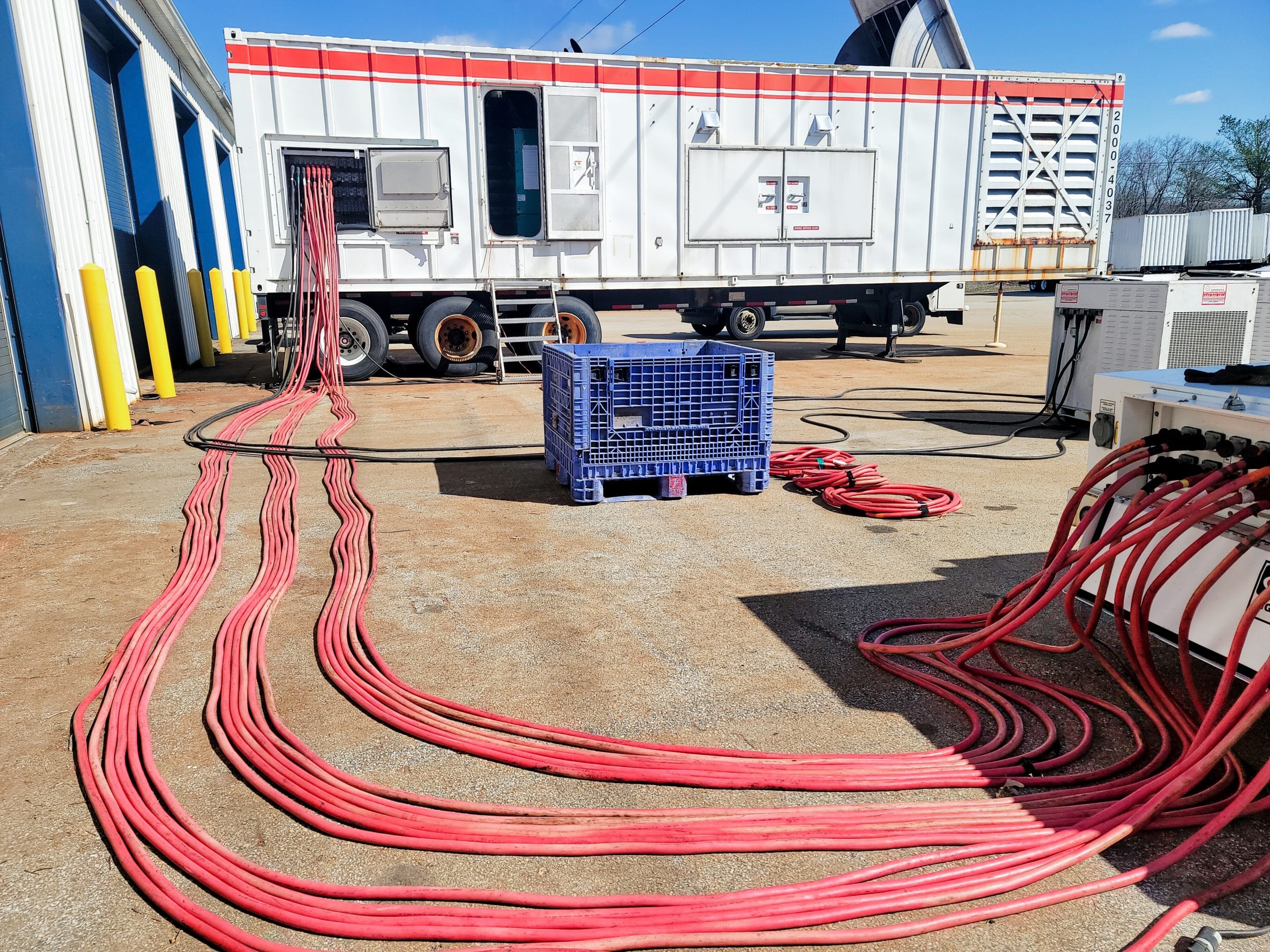
For commercial buildings, industrial facilities, hospitals, warehouses, and HOAs in Orange County and the Inland Empire, backup generators are not optional equipment. They are critical infrastructure for preventing downtime.
However, a common misconception is that a generator that starts successfully is fully reliable. In reality, startup alone does not confirm performance under actual electrical demand. Many failures only occur when the system is under load. Load bank testing addresses this gap. It is a controlled performance test that simulates real electrical demand on a generator without exposing the building to risk. If you are evaluating system reliability, it is often recommended to also review overall infrastructure through our commercial electrical services since generator performance is directly tied to electrical system capacity and distribution.
What Is Load Bank Testing?
Load bank testing is a diagnostic process that applies a controlled electrical load to a generator to verify its ability to operate at its rated capacity.
Instead of waiting for an actual power outage, the generator is tested under simulated real-world conditions such as lighting systems, HVAC loads, and motor-driven equipment. This ensures the system can handle actual demand scenarios safely and consistently.
Why Load Bank Testing Is Required for Commercial Systems
Generator Reliability Under Real Load Conditions: Generators often remain idle for long periods, which can lead to performance degradation over time. Load bank testing helps identify issues such as voltage instability, cooling inefficiencies, battery degradation, and “wet stacking” before they become critical failures.
Compliance and Operational Standards: Many commercial properties are required to maintain documented generator testing as part of safety and operational compliance. These requirements are typically addressed through licensed commercial electrical services to ensure proper documentation.
Risk Management and Insurance Protection: In the event of a power outage, failure to demonstrate proper maintenance and testing can impact insurance claims. Load bank testing provides verified proof of system readiness.
How Load Bank Testing Works
The process follows a structured sequence designed to safely simulate real electrical demand:
Inspection: The generator is first inspected for fuel integrity, battery condition, and control system readiness.
Gradual Application: Load is gradually applied in stages, increasing from lower percentages up to full capacity while technicians monitor voltage stability and temperature response.
Reporting: After testing, a performance report is generated. If issues are identified, corrective actions may be required through electrical panel service and replacement or related electrical repair work to ensure full system reliability.
How Often Load Bank Testing Should Be Performed
For most commercial systems, load bank testing is recommended on an annual basis. Additional testing may be required after major repairs, extended periods of inactivity, or system modifications. Facilities with higher operational demands or stricter compliance environments may require more frequent testing schedules to maintain reliability standards.
Who Requires Load Bank Testing
Load bank testing is commonly required across a wide range of commercial and industrial environments, including office buildings, retail centers, warehouses, manufacturing facilities, healthcare institutions, and HOA-managed properties.
In all cases, the goal remains the same: ensuring that backup power systems function as expected when primary power fails.
How Much Does Load Bank Testing Cost?
Load bank testing costs vary depending on the size of the system, access, and testing requirements but most projects fall into clear ranges.
- Residential generators: typically $500 – $1,500
- Commercial properties: typically $2,000 – $5,000
- Critical facilities (data centers, hospitals, large industrial): $5,000+
The reason for the gap is simple: larger systems require more load capacity, longer test durations, and more detailed reporting. Within these price ranges, several factors can affect the final cost.
Load bank testing simulates real operating conditions by applying controlled electrical demand to your generator, which means larger systems require significantly more equipment and coordination to test properly.
Key Factors That Affect Cost
Several variables determine the final cost of load bank testing. Larger generators require more load capacity and extended testing duration. Site location also plays a role, as access conditions and regional permitting requirements differ between Orange County and Inland Empire properties.
Fuel type, such as diesel or natural gas, can also affect testing procedures. In addition, accessibility challenges such as rooftop installations can increase labor complexity. Facilities requiring detailed compliance documentation may also experience additional reporting costs.
What to Look for in a Load Bank Testing Provider
A qualified provider should be a licensed electrical contractor with experience in commercial and industrial systems. Proper equipment is essential, as accurate load simulation depends on industrial-grade testing units.
Clear reporting is also critical for compliance and documentation purposes. Providers should have demonstrated experience with commercial electrical infrastructure, as system behavior varies significantly under load conditions.
In some cases, follow-up repairs may be necessary. A provider capable of handling both testing and corrective electrical work ensures faster resolution and system reliability.
Regional Considerations in Orange County and the Inland Empire
Commercial facilities in Orange County and the Inland Empire operate under high uptime expectations and strict inspection standards. As a result, backup power systems are a critical part of operational continuity.
Load bank testing is commonly scheduled as part of ongoing maintenance programs for facilities that rely heavily on uninterrupted power supply.
Final Thoughts
Load bank testing is not simply routine maintenance, it is a performance validation process for critical backup systems. A generator that has not been tested under load cannot be assumed reliable in real-world conditions.
When properly maintained and tested, backup power systems provide operational stability and reduce risk during outages. Without testing, even functional systems can fail when they are needed most.
Frequently Asked Questions
What is load bank testing?
Load bank testing is a process where a generator is run at full rated capacity to verify it produces stable and reliable power. It’s used to simulate real operating conditions and confirm the system performs properly under demand.
Why is load bank testing important for generators?
It’s important because certain electrical issues like voltage regulation problems only appear under full load. Load bank testing exposes these hidden issues that normal, light-load operation won’t reveal.
What types of properties need load bank testing?
Load bank testing is commonly used for commercial buildings, industrial facilities, hospitals, warehouses, and HOA properties that rely on backup power systems for critical operations.
What problems can load bank testing detect?
It can identify performance issues such as unstable power output and voltage inconsistencies. These are problems that may not show up during regular generator use but can lead to failure during an outage.
Is load bank testing part of regular generator maintenance?
Yes. Load bank testing is typically included in comprehensive generator maintenance because it verifies the system’s performance under real demand and helps prevent unexpected failures.
Load Bank Testing for Reliable Generator Performance
If your facility relies on backup power, verifying generator performance under real-world load conditions is essential. A system that starts successfully during a no-load test may still fail when tasked with supporting your actual building demand.
Start by reviewing your system through our commercial electrical services to understand how your generator integrates with your overall electrical infrastructure. If capacity or distribution concerns are present, a commercial electrical panel upgrade may be required to support proper system performance and safety.
To schedule a professional load bank test or comprehensive assessment, visit our contact page to receive a clear evaluation based on your facility’s actual operational requirements.